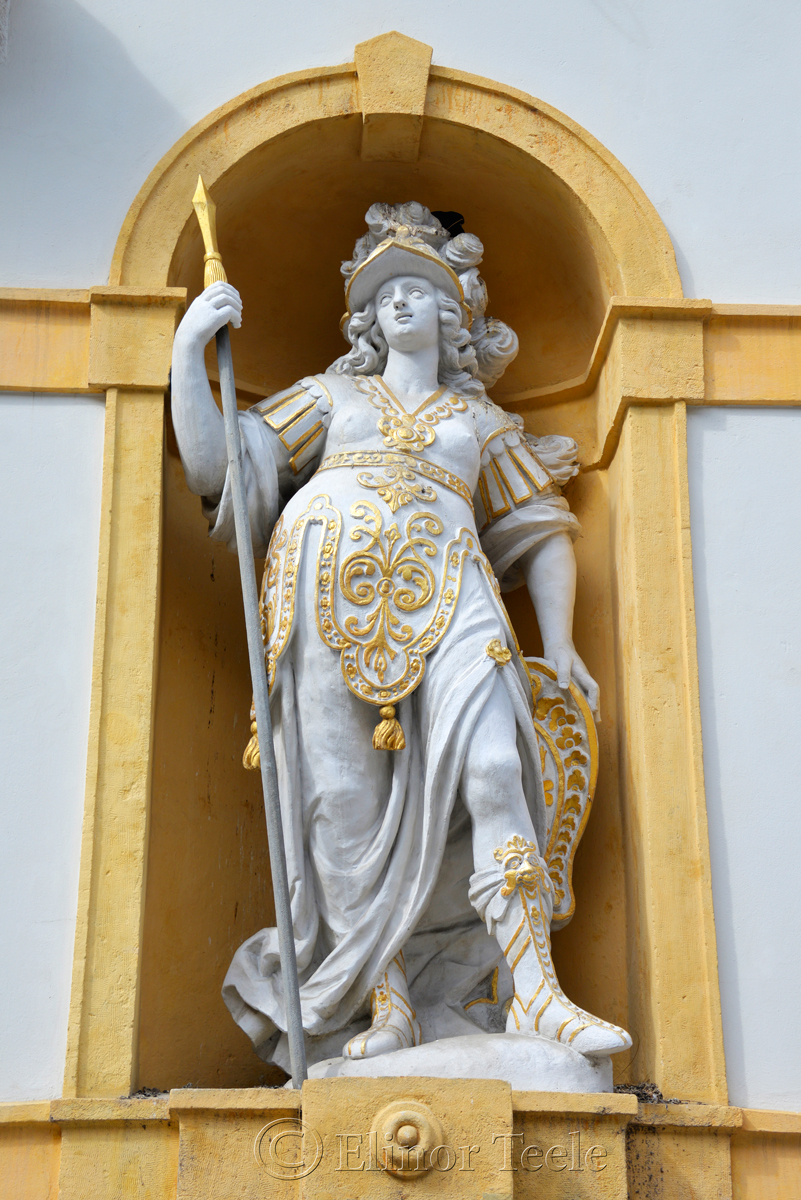
Minerva, Landeszeughaus, Graz, Austria
Minerva (Greek = Athena) is the goddess of war, wisdom, arts, trade, and strategy. You’ll spot her near Mars, on the outside of the Landeszeughaus.
Content Strategy & Fine Art Photography
Content Strategy & Fine Art Photography
Minerva (Greek = Athena) is the goddess of war, wisdom, arts, trade, and strategy. You’ll spot her near Mars, on the outside of the Landeszeughaus.
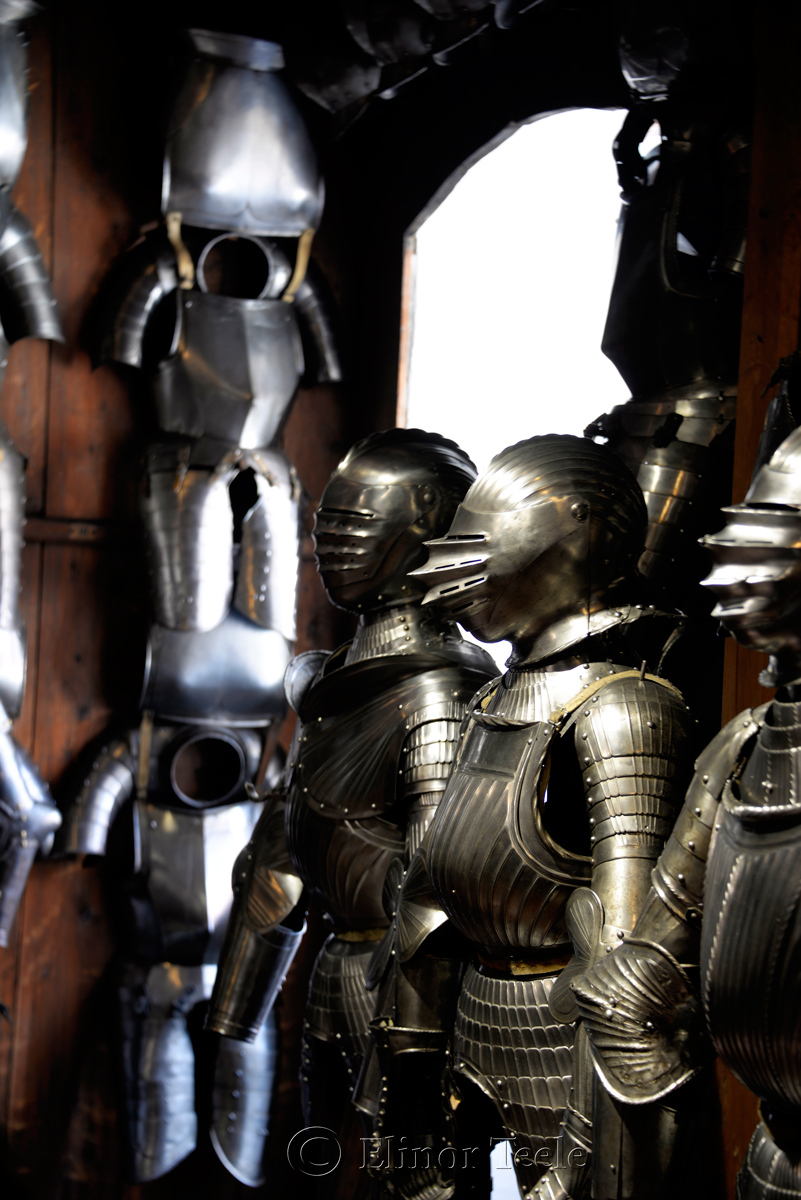
The Landeszeughaus is a 10-year-old boy’s version of the rapture. As the world’s largest historic armory, it contains 32,000 exhibits on 4 packed floors. Anyone who has seen the Substitutiary Locomotion Battle in Bedknobs and Broomsticks will have some idea of its scope. Along with pikes, swords, and gruesome weapons of
Continue readingLandeszeughaus (Styrian Armory), Graz, Austria 1
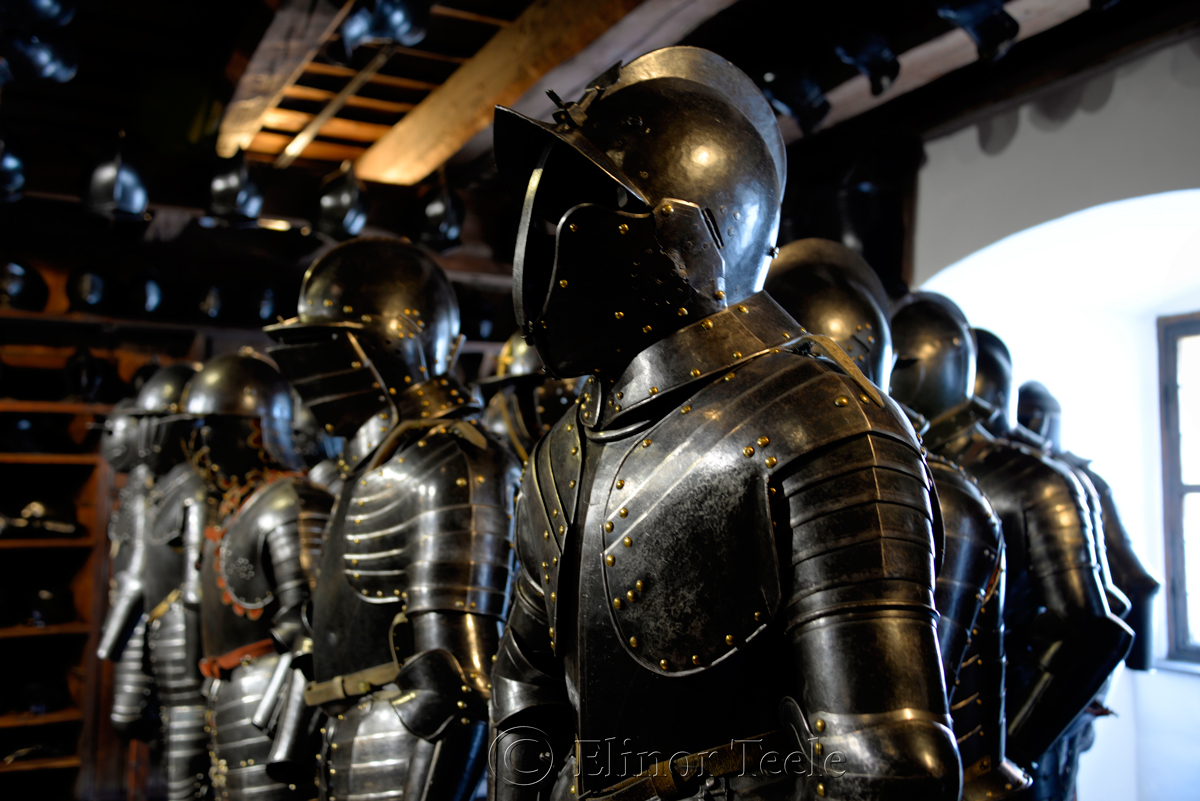
A short tally of the Styrian Armory holdings: 3,300 armors & helmets 7,800+ small arms (including muskets & pistols) 5,400 staff weapons 2,400 swords, sabres & similar Originally, the armory had 92 cannon. As Napoleon stormed across Europe, heavy guns were sent to Yugoslavia for safe-keeping. Unfortunately, these were later
Continue readingLandeszeughaus (Styrian Armory), Graz, Austria 2
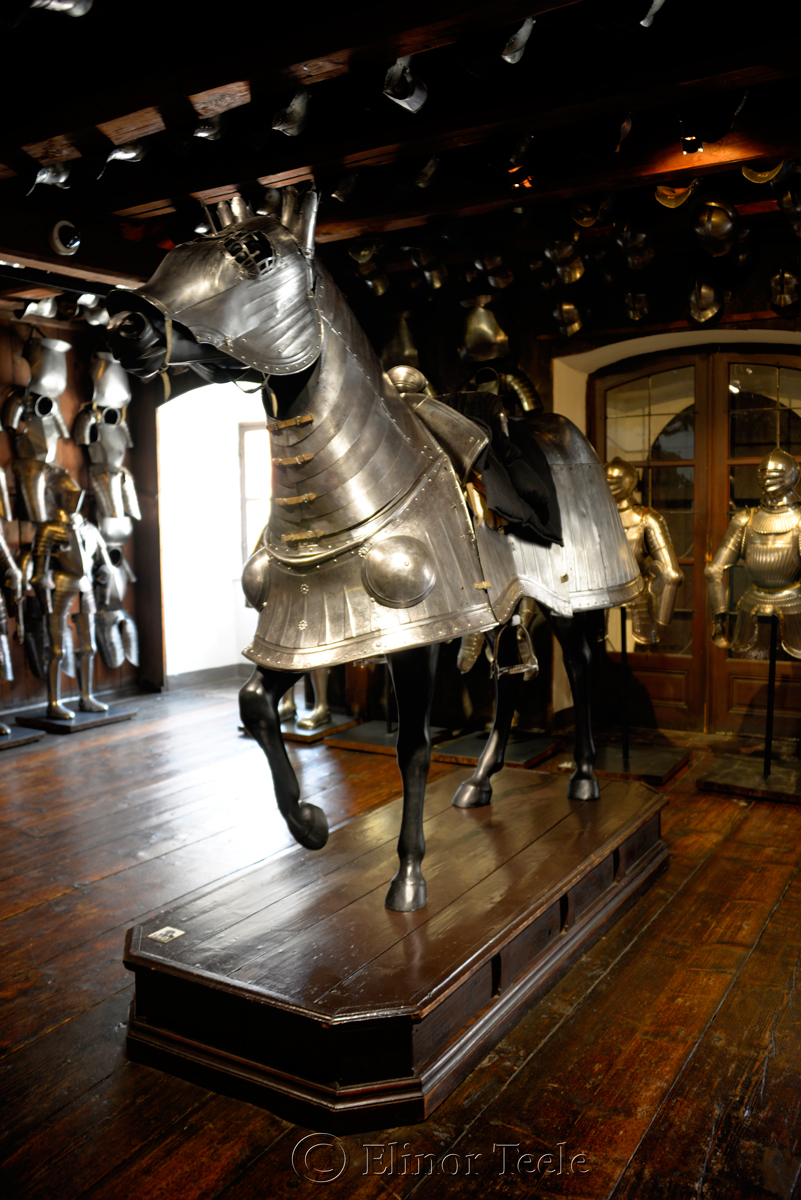
This majestic charger comes to you courtesy of Konrad Seusenhofer, master armorer to the stars. Once the property of Georg von Stubenberg-Wurmberg, it is one of only 7 complete horse armors in the world. In the early 16th century, Seusenhofer had the good fortune to work for a famous patron
Continue readingHorse Armor, Landeszeughaus (Styrian Armory), Graz, Austria
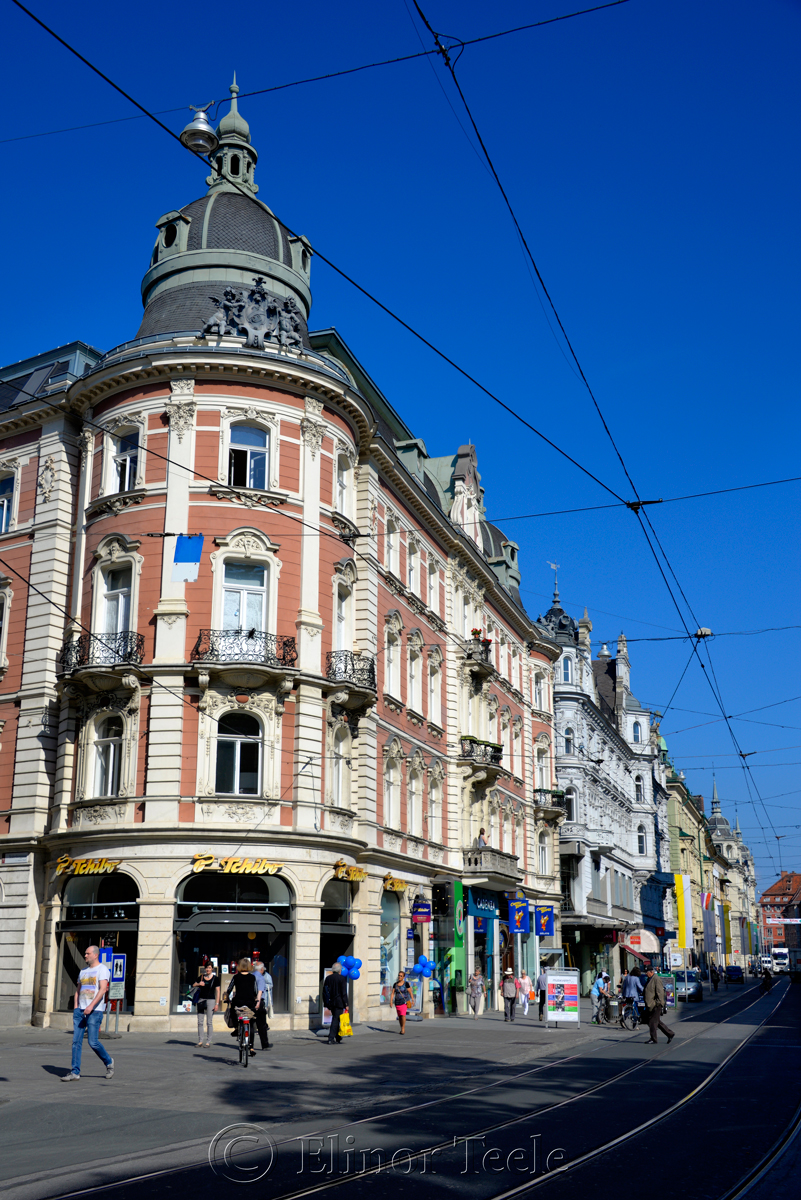
Broad and busy, Herrengasse is the main street through the inner city. It begins at the Der Platz Am Eisernen Tor (“Place at the Iron Gate”), where the former city gate once stood, and ends at the Hauptplatz and its tram station. It’s a good place to start your meanderings.
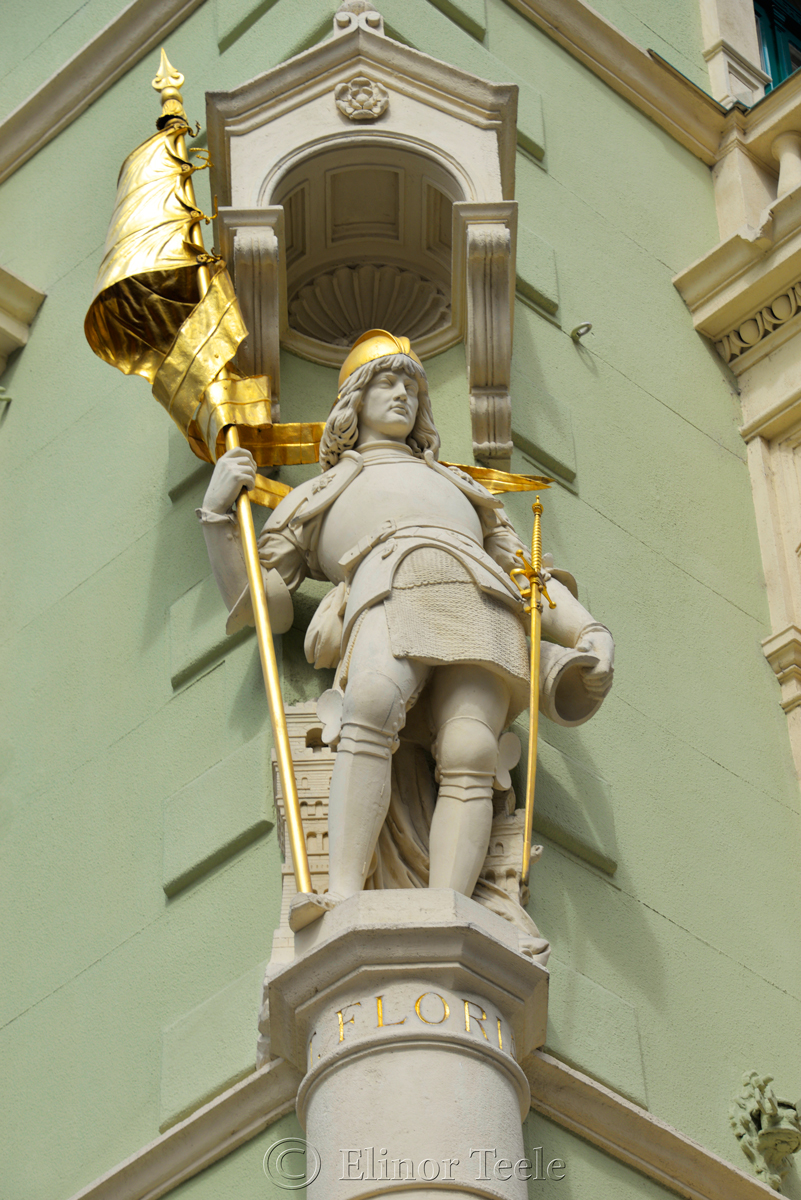
St. Florian watches over chimney sweeps, firefighters, and soapmakers. (Note the fire bucket in his left hand.) Born in the 3rd century, Florian was a successful Roman commander and proto-Austrian (his birthplace is in Sankt Pölten). His job was quench any flames – figurative or literal – that might arise
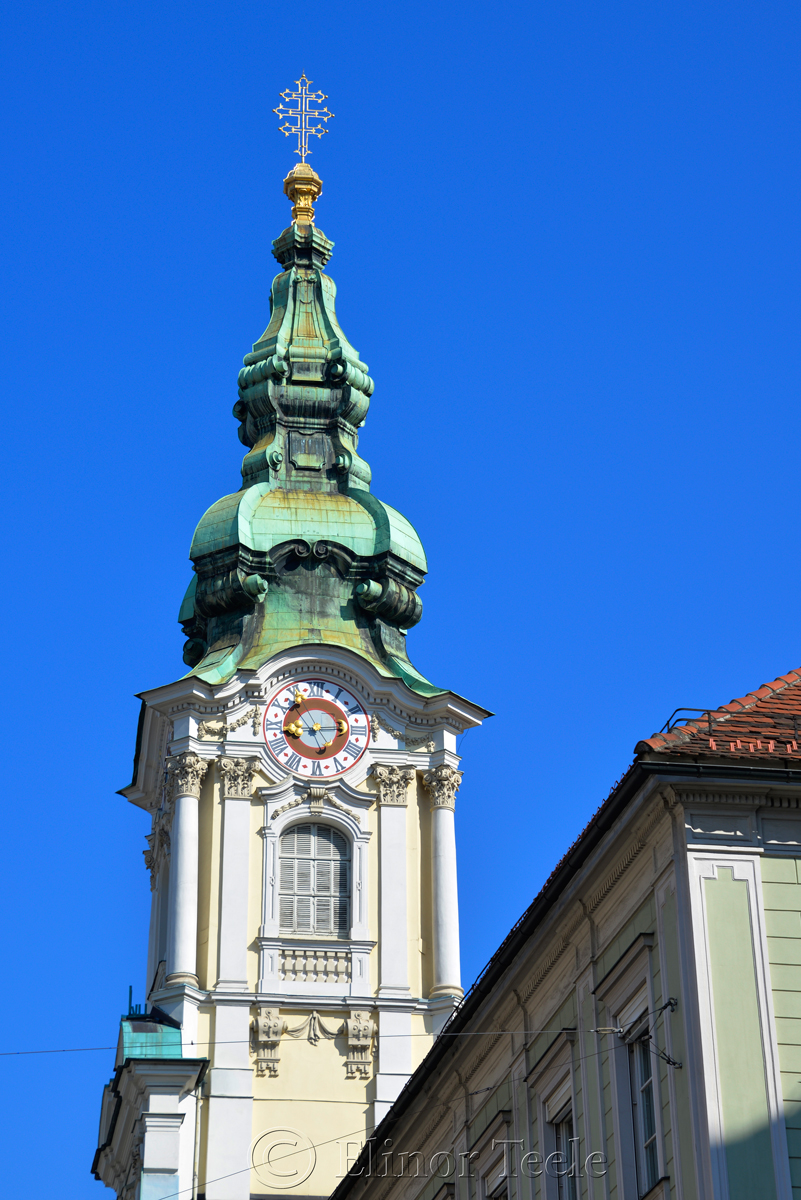
Hidden in Graz’s Parish Church is a damning indictment of 20th century fascism. Take a close look at the stained glass window in the chancel. You’ll see 2 familiar figures – Hitler and Mussolini – among the torturers of Christ at the crucifixion. Their place in hell was guaranteed by
Continue readingStadtpfarrkirche, Herrengasse, Graz, Austria
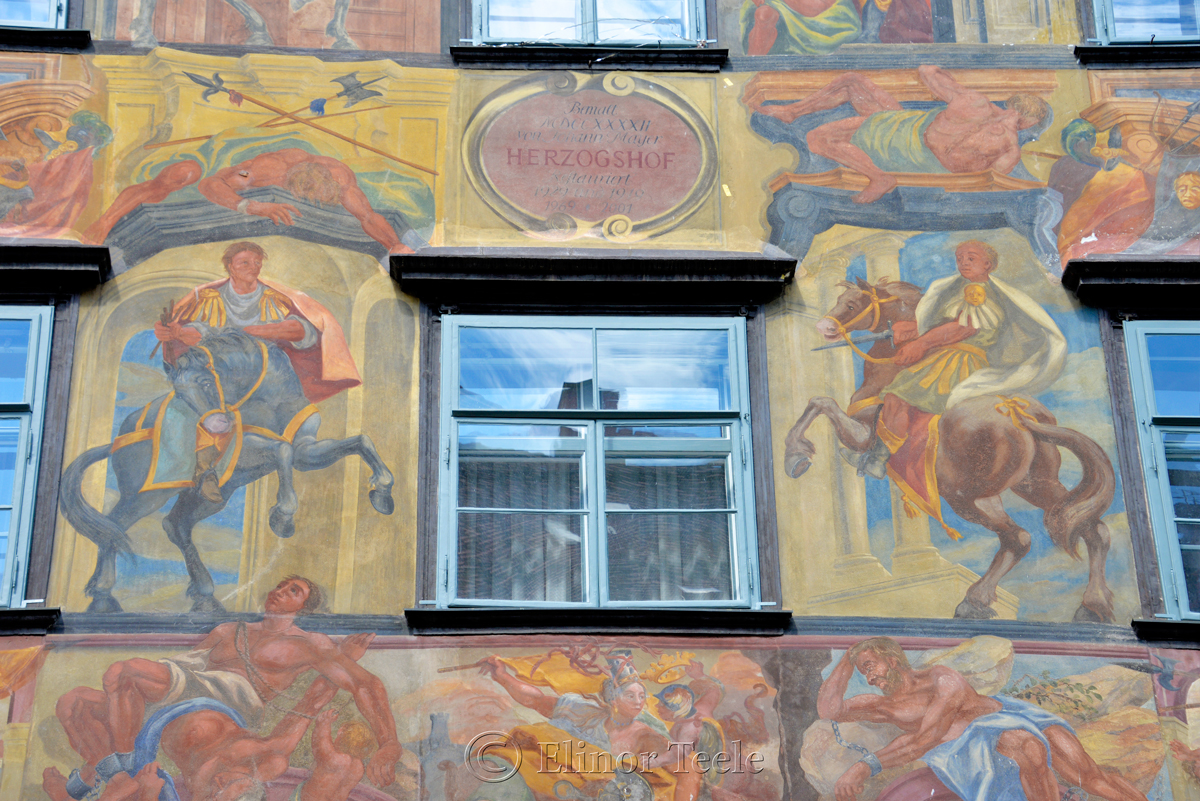
Although they may appear like the products of a modern tanning bed, the Greco-Roman gods and goddesses on #7 Herrengasse are the work of the Baroque painter, Johann Mayer. Until A.D. 1450, when Graz Castle was built, Herzoghof (“Duke’s Court”) was the seat of the Dukes of Styria. Later in
Continue readingGemaltes Haus (Painted House), Herzoghof, Graz, Austria
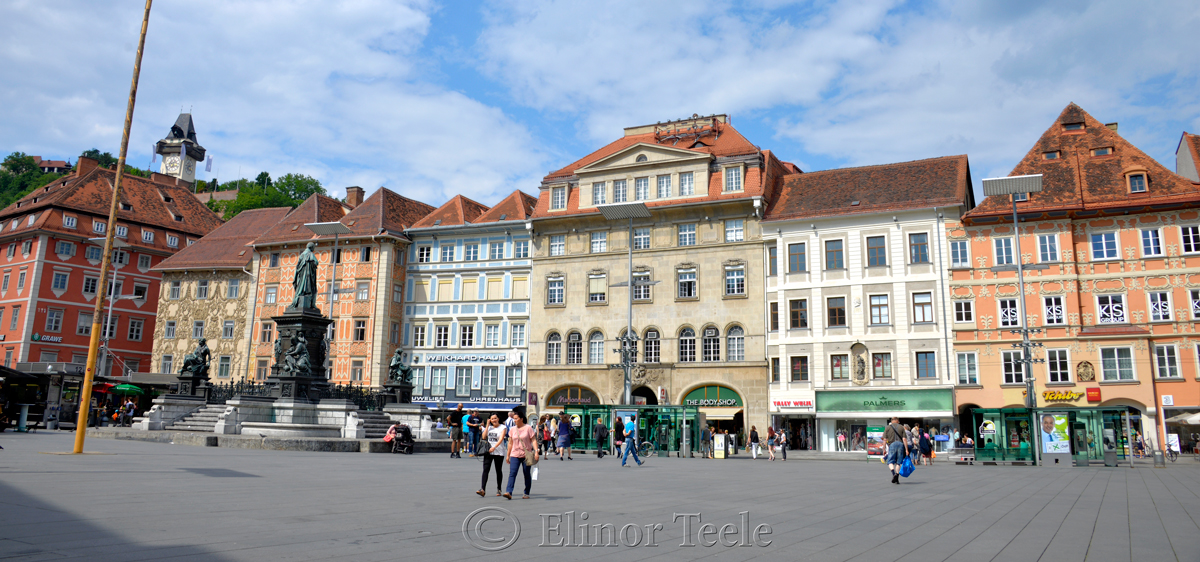
A city is defined not by its madness, but by its grace. Graz is the capital of the Steiermark (“Styria”), an Austrian federated state bordering Slovenia. Despite being landlocked, Graz has a Mediterranean feel about it. There are children playing in fountains, restaurants serving wines from Styrian Tuscany, and hidden